Although dental implants were originally placed by the ancient Egyptians centuries ago, it wasn't until the late 1980's that dental implants came of age in the United States. The titanium implant was first used in Europe in the mid 1960's. But it was when it was introduced into the U.S. that its uses and cosmetic applications exploded in development. 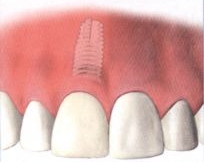 A dental implant is basically a titanium screw, which is inserted into and fuses to your jawbone. On this implant a permanent post is placed and then your restorative dentist cements a cap, or crown. There are many variations on this depending upon how many missing teeth are involved. A dental implant is basically a titanium screw, which is inserted into and fuses to your jawbone. On this implant a permanent post is placed and then your restorative dentist cements a cap, or crown. There are many variations on this depending upon how many missing teeth are involved.
S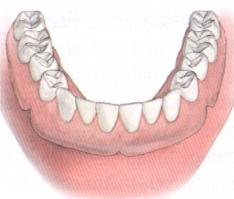 ometimes implants are used to support false teeth or dentures, which are either screwed into your implants (only your dentist can remove this prosthesis), or the denture is snapped over a retaining bar screwed to your implants. You can take these out to clean. ometimes implants are used to support false teeth or dentures, which are either screwed into your implants (only your dentist can remove this prosthesis), or the denture is snapped over a retaining bar screwed to your implants. You can take these out to clean.
The use of implants has given us the ability to do extreme makeovers of your mouth to improve your appearance and smile. Foods long avoided such as steak and corn-on-the-cob can be eaten once again without concern or discomfort. It truly opens up new horizons for making people happy with their looks, their function, and their state of mind. That is only one reason "why implants?"
Dental implants have gotten significantly better over the years and improvements come over months rather than years. If you are seeking implant information be sure to check when the article was written. Here is where we are now:
| Implant placement is a painless procedure. |
Only the area the implant is to be placed needs to be anesthetized. Over 99% of patients DO NOT need a nerve block for implant placement.
It generally takes less than an hour for a simple dental implant placement in our office. |
| Implant recovery is quicker than before. |
Under normal circumstances the latests materials we use take 8 weeks for the implant to fuse with the bone. The older implants took 4-6 months at a minimum. Softer bone may take longer, however.
Bone regeneration and sinus augmentation for new bone formation will obviously take months to occur so you can't stress the bone as early as your healthy mature bone.
Implants can be placed at the time of tooth extraction - unless you have infection in the area or not enough bone above the extraction socket to be able to stabilize the implant. Previously we had to wait until the socket healed with new bone.
Implants can be immediately loaded with a permanent post and a temporary tooth at the time of placement in the front of your mouth. We now have new 'one piece implants' which need only a temporary crown. You leave with front teeth the day of implant placement. This is also now true even if you have no lower teeth. You can have "same day" lower fixed prosthesis after we place your implants.
If you have missing teeth or your teeth are being lost, there is a good chance you will have "same day teeth". However, because the back teeth are involved in heavy functions when chewing, immediate teeth there are not advised.
Dental implants are very successful and about 96% of implants fuse to the bone. The material is very similar to hip replacement implants. We are not aware of any reported allergic reaction to titanium and have not seen it in the 15 years of placing implants.
Implant manufacturers stand behind their product and will replace them if something goes wrong, at no charge, for 10 years, and some , for your lifetime. This says a lot about product reliability.
|
| If you face the prospect of losing a tooth, you have a choice to replace with an implant or a fixed bridge. |
The best choice would be - an implant. Why? There are several reasons. First, you don't have to cut down 2 adjacent teeth to replace and hold the missing one. It is also difficult and annoying to clean under a bridge space. It becomes, therefore, more susceptible to tooth decay. With an implant, it stands by itself. You don't have to involve adjacent teeth, you can floss, you are not aware that it's not yours. Also, implants dont decay and implants don't need root canals. That's "why implants".
If you are about to lose all your remaining teeth or have no teeth now - we have solutions to free you from wearing dentures. The placement of enough dental implants will allow your dentist to build a fixed prosthesis probably stronger than what you have had before with your natural teeth.
Since implants are placed into the bone, functioning with implants has another great benefit. The constant vibration of the implant in the bone will preserve your jawbone. If you lose your teeth, and wear dentures, with time the jawbone begins to shrink. You develop the "old person" caved in face. This doesn't happen when you have implants placed. So implants preserve bone and allow a more youthful face. That's "why implants?"
We are always happy to talk about the benefits of implants with you, the latest advancements, whats on the horizon, and how implants can possibly help you if you are facing the prospect of losing a tooth, or want to replace what's already missing. Implants open up a new world of solutions for you.
|
|